Elevating Textile Branding with a Realistic Bath Towel 3D Mockup
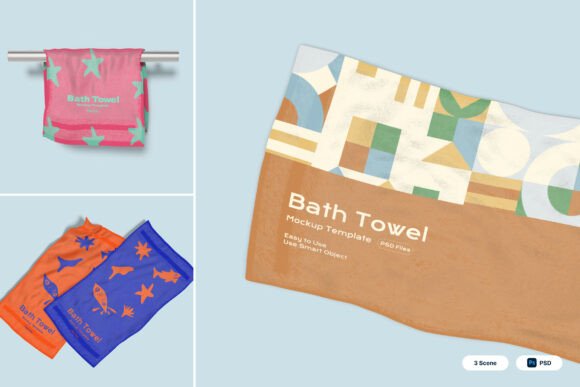
Visualizing soft goods presents a unique challenge in digital design. Unlike rigid packaging or flat print media, textiles have weight, drape, and texture that are difficult to capture without expensive photography. A high-quality Bath Towel 3D Mockup bridges this gap by providing a photorealistic canvas for branding, pattern testing, and e-commerce presentation. This specific resource offers three distinct PSD files featuring both folded and hanging towel scenes, allowing designers and brand owners to showcase products with tangible realism. The inclusion of smart object layers means you can simply double-click, place your design, and save, transforming a generic textile render into a bespoke product visualization in seconds.
Streamlining E-Commerce and Product Launches
For online retailers and DTC brands, the speed at which a product goes from concept to storefront is critical. Traditional product photography requires sourcing physical samples, hiring a photographer, renting studio space, and waiting for post-production. When utilizing a Bath Towel 3D Mockup, this timeline collapses significantly. You can generate professional-grade listing images before the first unit has even left the factory floor.
The 4000 x 3000 pixel resolution at 300 DPI ensures these assets are not just placeholders but final production-ready images suitable for high-definition displays and print catalogs. For sellers on platforms like Etsy, Amazon, or Shopify, consistency across listings builds trust. Using the same mockup template for an entire collection ensures uniform lighting, shadow depth, and perspective, creating a cohesive brand aesthetic that ad-hoc photography often lacks. The ability to swap patterns via smart objects allows for rapid A/B testing of colorways or logo placements without additional overhead.
Enhancing Hospitality and Spa Merchandising
The hospitality industry relies heavily on tactile perception. Hotels, spas, and resorts sell comfort, and their merchandise must reflect that promise digitally. A realistic bath towel 3D mockup designed with soft fabric textures is particularly valuable here because it communicates quality through visual cues. The rendering captures the plushness of terry cloth and the way light interacts with woven fibers, suggesting luxury to potential guests or wholesale buyers.
Consider a boutique hotel launching a private-label spa line. They need to present these items to investors or display them in an online gift shop. The hanging towel scene included in this pack mimics how a guest actually encounters the product in a bathroom setting, providing context that a flat lay cannot. Conversely, the folded towel scene is ideal for retail packaging visuals or shelf-talkers. This versatility allows hospitality marketers to tailor their visual assets to different touchpoints while maintaining brand integrity.
Practical Applications for Surface Pattern Designers
Textile artists and surface pattern designers face the perpetual struggle of showing how a 2D repeat translates to a 3D form. A flat JPEG of a botanical print tells only half the story; seeing that print wrap around the folds of a towel reveals scale, orientation, and readability. This Bath Towel 3D Mockup serves as an essential portfolio tool for creatives pitching to manufacturers or selling digital assets.
When showcasing fabric patterns, the texture mapping within the PSD file preserves the underlying weave of the towel. This means your design doesn't look like a sticker pasted on top of an image; it looks dyed or embroidered into the material. This distinction is vital for licensing agreements where clients need to understand exactly how their intellectual property will appear on finished goods. Designers can use the customizable branding areas to demonstrate placement options for logos or monograms, adding value to their pitch by solving visualization problems for the client upfront.
Navigating Technical Considerations and Workflow
While the barrier to entry is low thanks to the included PDF help file and smart object functionality, getting the most out of these files requires some practical awareness. The "double click, place, save" workflow assumes familiarity with Adobe Photoshop. Users should ensure their software version supports smart objects and can handle large file sizes efficiently. At 4000 x 3000 pixels and 300 DPI, these files are substantial. Working on a machine with adequate RAM prevents lag during the rendering process.
It is also important to manage expectations regarding stock elements. All image stock inside is not included, meaning any background props, bathroom fixtures, or decorative elements seen in preview images must be sourced separately or removed. This is actually a benefit for professional work, as it prevents your brand imagery from appearing identical to other users who purchased the same asset. Treat the towel itself as the hero asset and build your own unique environment around it to maintain exclusivity.
Strategic Branding and Customization Nuances
The customizable branding areas are where this mockup transitions from a simple display tool to a strategic asset. In textile manufacturing, the placement of a tag, embroidery, or printed logo affects both aesthetics and cost. Using this mockup allows brands to experiment with positioning before committing to production tooling. You might discover that a centered logo gets lost in the fold lines, whereas a bottom-corner placement remains visible whether the towel is hung or folded.
For print-on-demand businesses, this level of visualization reduces return rates. Customers often return textile products because the print size or location didn't match their mental image. By presenting accurate, high-resolution previews generated from this Bath Towel 3D Mockup, you align customer expectations with reality. The soft fabric textures rendered in the file help convey the hand-feel of the product, addressing another common point of friction in online textile sales.
Balancing Realism with Artistic Direction
While the 3D render provides exceptional realism, it should be viewed as a foundation rather than a final destination. The lighting and shadows are pre-baked to look natural, but they may not perfectly match every brand's art direction. Savvy designers use adjustment layers, color grading, and overlay techniques to integrate the mockup into their specific visual identity. The high resolution provides enough data latitude for significant color correction without degradation.
Users should also consider the narrative context. A towel floating in white space is functional but sterile. Adding subtle environmental cues—a hint of marble countertop, a blurred plant in the foreground, or warm ambient lighting—can dramatically increase conversion rates by helping viewers imagine the product in their own lives. Since the stock props aren't included, this encourages intentional set dressing that aligns with your target demographic's lifestyle aspirations rather than generic stock photography tropes.
Ultimately, this resource solves the friction between digital design and physical product representation. Whether you are validating a new weave structure, pitching a hotel amenity program, or building a Shopify store, the ability to visualize soft goods accurately saves time, reduces sampling costs, and elevates perceived value. The combination of technical specs (high res, smart objects) and practical scene variety (folded, hanging) makes it a versatile workhorse for anyone in the textile or home goods space. Success lies not just in using the file, but in leveraging its realism to tell a more convincing product story.